

A Year in Review: Reflections on The Patent Profession’s Past and Future
At A Glance
The IP profession continues to evolve at pace, shaped by technological change, shifting client expectations, and new pressures on talent. As 2026 begins, we set out to reflect on the past year and consider the trends likely to define what comes next.
To many, the future of the profession may feel more uncertain than ever. As AI quietly looms and the pace of innovation continues to accelerate, many are wondering what comes next and what is truly valued. MWA set out to explore the key themes shaping the future of the patent profession across Europe.
Our conversations reveal a sector balancing technological disruptions, evolving client expectations, and the urgent need to attract and retain fresh talent. Through insights from Rike Dekker, Alexander Bjørnå, and Joeri Beetz, MWA explores where we are now – and what the future might hold for the profession. We aimed to provide an overview and summary with useful remarks, particularly for those emerging through the profession.
#1. AI Is Here; But Humans Still Matter
AI is already reshaping workflows in IP. Tools for patent drafting, searches, and translations are erupting across the industry, promising exciting efficiency gains. However, concerns about quality and accountability remain.
AI resources are often likened to a trainee patent attorney creating an initial patent draft: although the blueprint is there, there will always be the need to craft it into a viable end result. Those who embrace these new advances see it as a way to enable patent professionals to focus on higher-value work – advising clients, shaping IP strategy, and navigating complex legal landscapes. When applied thoughtfully, AI presents an opportunity to enhance consistency, reduce administrative burden, and support better-informed decision-making across the patent lifecycle.
Although there is a long road ahead, AI is clearly here to stay. How rapidly and broadly it becomes interwoven is still uncertain. We look forward to continuing to delve into the future of AI within the patent profession in future articles.
#2. The Balancing Act: Commercial Aims & Changing Client Expectations
As AI becomes woven into the patent process, there is a concern that clients will expect more for less. Indeed, this is already the case for some – with clients expecting a lower fee due to the assumption that AI tools are included in the process – and a concern shared by the majority of our panel.
Some firms are responding by pivoting and evolving their services: ensuring they are seen as a trusted counsellor and not simply a patent drafter. Time freed up by AI allows attorneys to focus on high-level, strategic tasks and advice. This adjustment takes time and there are many firms resistant to this change – unsure it is the direction the industry should be taking. However, others embrace it, and the effect of these pressures from firm to firm is yet to be seen.

#3. Beyond Law: The Rise of the Business-Savvy Patent Attorney
As alluded to, the role of the patent attorney is shifting from simply a technical drafter into a strategic partner. This is already evident to many and can be seen not just in private practice (as indicated in #2) but also in the shift to increasing IP Manager type roles in-house too.
Tomorrow’s IP leaders will need more than legal and technical expertise—they’ll need commercial insight, business knowledge and negotiation skills. This may come as no surprise to some, yet it certainly highlights the challenge of equipping upcoming professionals.

Current qualification systems, the EQE for example, remain heavily focused on procedural and technical skills. Previous EQE papers allowed participants to delve deep into the problem-solving aspects of being a patent attorney (via the six-hour-long Paper C), however these have been shortened. A depth of critical thinking is perhaps not emphasized in the new structure – something particularly noted by Joeri Beetz, who has spent many years tutoring trainees for the exams.
Nevertheless, business and commercial knowledge with critical thinking is no longer optional – it’s essential. So how does the industry address this? While some firms are introducing internal programs for commercial training, uptake is slow and broad industry initiatives currently show no signs of deliverance. It remains to be seen how this will develop across the coming few years.
However, to train professionals, you must first attract them.
#4. Talent Scarcity & Retention – A Very Real Concern
Recruiting new talent is becoming harder, with stark regional contrasts emerging too. Not only is talent attraction of concern but retention too. This is not just a concern of resources but also of financial input. One firm which invests hundreds of thousands of euros into the cost of attracting, training and remunerating a trainee likely has a queue of other firms waiting to poach said newly qualified talent. These concerns were particularly noted by leaders across continental Europe.
Every day we speak with firms (the main training avenue for young attorneys) experiencing considerable challenges in attracting and retaining talent. With a view across Europe, Alexander Bjørnå spoke of the particular difficulties in attracting people into the Norwegian profession – a country which saw only 9 individuals sit the EQE in 2025. Compounding this is the declining trend of those entering the profession; particularly in the last few years with a 50% decrease in EQE participants between 2022 and 2025.
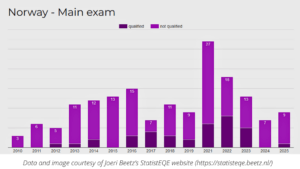
Additionally, Rike Dekker spoke of those entering the profession in the Netherlands. Usually there is a group of approximately 10-20 trainees however this year there are only 3 or 4 new candidates. Although discussion across firms in the Netherlands indicates there is perhaps not a declining trend – given that fluctuations over the last few years are common. It clearly remains uncertain how these will trend in the coming years.
In some extreme cases this can even see smaller firms look towards M&As because these difficulties are proving too challenging to continue operating independently. Today, MWA is involved in a growing number of M&A projects; particularly, in support of smaller firms in this exact situation.
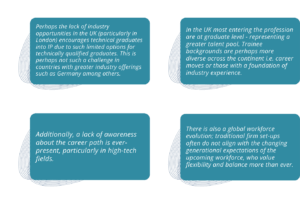
Confounding these challenges are the interesting geographical disparities between the UK and other European countries. UK firms report hundreds of applications for trainee roles each year, while firms in Germany, the Netherlands, Norway and many other regions struggle to attract candidates.
So why might this be the case? We explored a few possible explanations:
Advice for Tomorrow’s IP Leaders
For those who do enter the profession in this evolving landscape, it continues to be a challenging yet highly rewarding career with a level of demand, flexibility and mobility often unseen in many other careers.
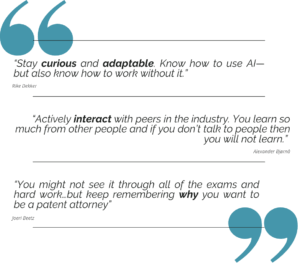
Some of today’s IP Leaders have shared the following advice for those upcoming professionals who are navigating this unique time:
With Thanks
We would like to thank all of those people who engage daily with us, participating in interesting discussions on the industry, its needs, and its challenges. In particular, thank you to the following professionals who gave up their time to have an engaging discussion: